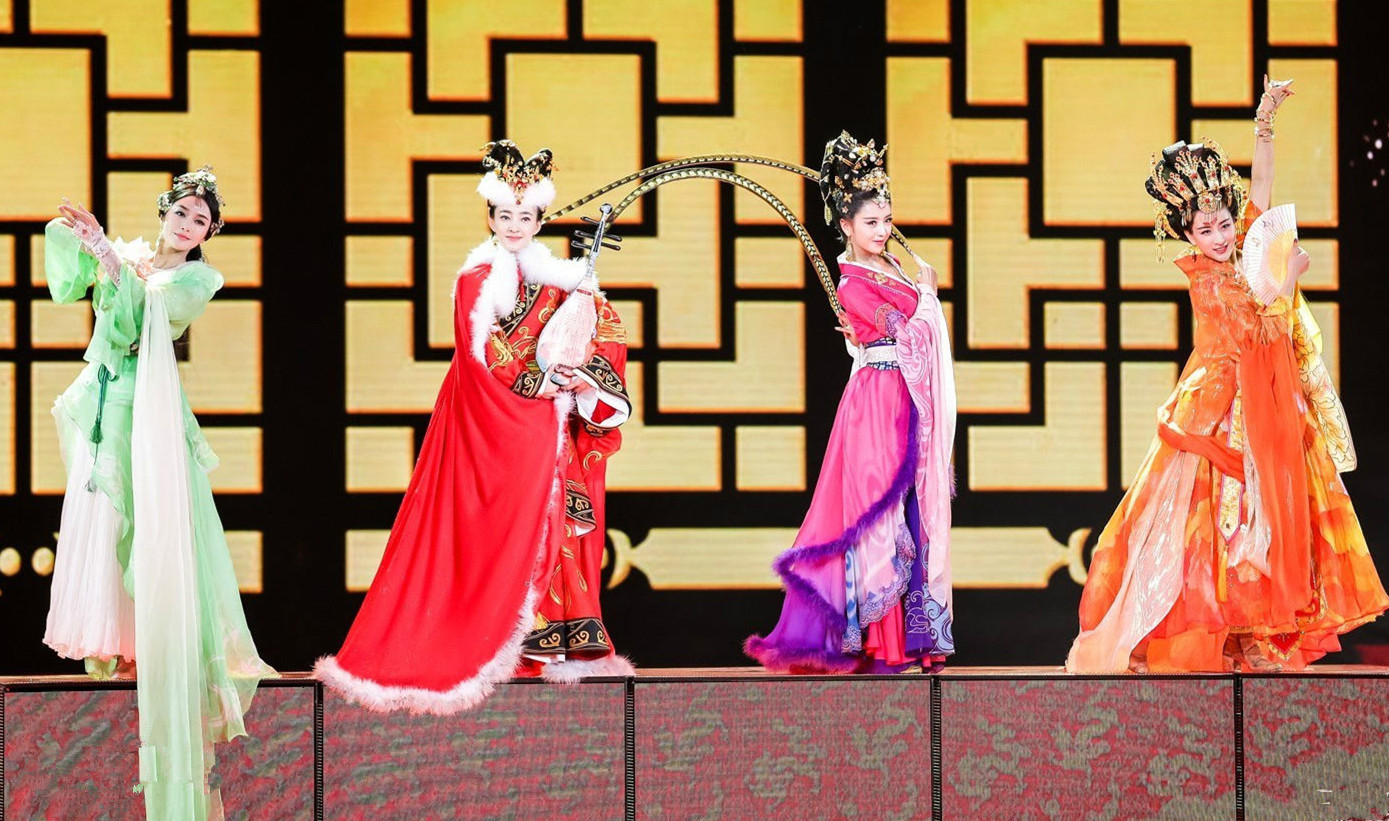
Four Beauties of Ancient China
Introduction
The Four Beauties of ancient China are legendary figures celebrated for their exceptional beauty, which has been immortalized in Chinese folklore and history. These women, Xi Shi, Wang Zhaojun, Diao Chan, and Yang Yuhuan, are renowned not only for their physical allure but also for their influence on Chinese history and culture. They lived in different dynasties, and each one of them left an indelible mark on the political and cultural landscape of their time. The tales of their beauty and the roles they played in historical events have been passed down through generations, and they have become iconic symbols of beauty and femininity in Chinese culture.
The Four Beauties
Xi Shi
Xi Shi, the earliest of the Four Beauties, lived during the late Spring and Autumn Period (770-476 BC) in the Kingdom of Yue. She hailed from a small village in Zhuji, Zhejiang province, known for its scenic beauty and rich history. Xi Shi's allure was such that it was said to make fish forget to swim and sink to the bottom of the water, hence the saying "chenyu" (sinking fish). This reflects not only her stunning appearance but also the textile boom of her hometown, as her mother was a weaver, and Xi Shi herself was often depicted washing yarn by a stream. The textile industry remains a hallmark of Zhuji, which produces a significant portion of China's hosiery.
Xi Shi's legendary beauty was instrumental in the downfall of the State of Wu. She was sent by King Goujian of Yue as a part of a strategic plan to distract and weaken King Fuchai of Wu. Her presence in the Wu court led to political upheaval, eventually contributing to the downfall of Wu, highlighting the profound impact her beauty had beyond aesthetics.
Wang Zhaojun
Wang Zhaojun lived during the Western Han Dynasty (206 BC – 24 AD) and was known for her grace and wisdom. She was selected as one of the maidens to be sent to the imperial harem, but she remained largely unrecognized due to her refusal to bribe the palace painter who was responsible for painting portraits of the women for the emperor to choose from. Her true beauty was revealed when she volunteered to marry the Xiongnu chieftain to secure peace between the Han Dynasty and the Xiongnu. Her marriage symbolized a significant political alliance and is a testament to her influence in fostering peace and diplomacy. Wang Zhaojun's story has been romanticized in various art forms, emphasizing her sacrifice and the role her beauty played in political alliances.
Diao Chan
Diao Chan is a somewhat mythical figure, whose historical existence is debated, but she is celebrated for her role in the Three Kingdoms period (220-280 AD). As one of the Four Beauties, Diao Chan's tale is famously told in the historical novel "Romance of the Three Kingdoms." She is best known for her involvement in the downfall of the warlord Dong Zhuo. According to legend, Diao Chan was used in a scheme by the minister Wang Yun to create discord between Dong Zhuo and his adopted son Lyu Bu. Her beauty and charm ensnared both men, leading to a conflict that resulted in Dong Zhuo's assassination by Lyu Bu. Her story underscores the power of beauty as a tool for political intrigue and manipulation. Her beauty was said to outshine the moon, a sentiment captured in the phrase "biyue" (shaming the moon).
Yang Yuhuan
Yang Yuhuan lived during the Tang Dynasty (618-907) and was the beloved consort of Emperor Xuanzong. Yang Yuhuan's life and tragic love affair with the emperor have been romanticized in countless poems and plays, most notably in Bai Juyi's "The Song of Everlasting Sorrow." Her influence over the emperor was profound, though it ultimately contributed to political unrest and her tragic demise. Her story continues to captivate audiences and has been depicted in various operatic productions, highlighting the cultural and historical impact of her beauty.
Cultural Impact
The Four Beauties of ancient China have had a lasting cultural impact that transcends their historical origins. Each of these women is associated with idioms and stories that emphasize their extraordinary beauty and its consequences. Their tales have been preserved in literature, poetry, and folklore, serving as a conduit for cultural values and historical narratives. The stories of the Four Beauties illustrate themes of sacrifice, political intrigue, and the power of feminine allure, which resonate throughout Chinese history and culture.
In addition to their historical narratives, the Four Beauties are often associated with metaphoric expressions that describe their beauty's impact on nature and human emotion. These idioms have become part of the Chinese language and culture, reflecting the deep cultural significance of these legendary figures. Their stories have been adapted into various art forms, from traditional operas to modern films, demonstrating the enduring allure of their tales.
Legacy and Influence
The legacy of the Four Beauties extends beyond their historical contexts, influencing various aspects of Chinese culture and society. Their stories have inspired countless works of art, literature, and drama, becoming an integral part of China's cultural heritage. Artists and writers have drawn upon their tales to explore themes of beauty, power, and the intersection of personal desires with political ambitions.
In modern times, the Four Beauties continue to be revered as symbols of ideal beauty and feminine power. They are often depicted in paintings and sculptures, where their stories serve as allegories for contemporary issues. The influence of the Four Beauties is also evident in celebrations and festivals, where their stories are retold to highlight cultural traditions and values.
Representation in Art and Media
The Four Beauties have been prominently featured in various forms of art and media, reflecting their significance in Chinese culture. In Peking Opera, the roles of these women have been portrayed by renowned performers, bringing their stories to life on stage. The legendary Peking Opera master Mei Lanfang famously portrayed Yang Guifei, showcasing the beauty and tragedy of her story through music and performance. His portrayal has been revived and adapted by subsequent generations, demonstrating the timeless appeal of Yang Guifei's tale.
In visual arts, the Four Beauties are commonly depicted in traditional Chinese paintings and sculptures. Artists like Yu Zuokun have reimagined these figures through contemporary art, using techniques such as "xieyi" to capture the spirit of these historical icons. This artistic representation emphasizes the timeless allure and mystery surrounding the Four Beauties, inviting audiences to explore their stories in new and creative ways.








